Monday, October 5, 2026 - Chongwe and Rufunsa
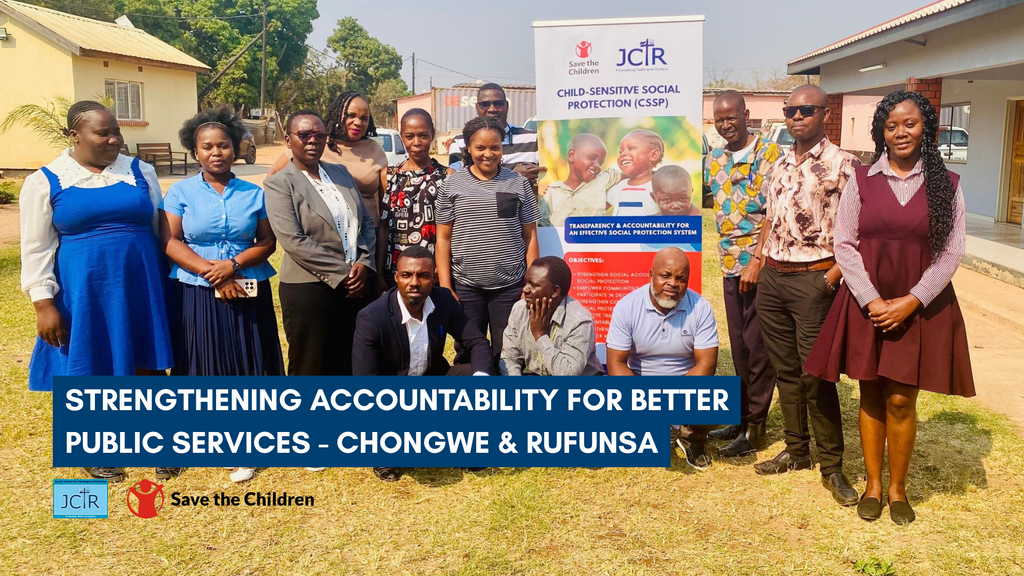
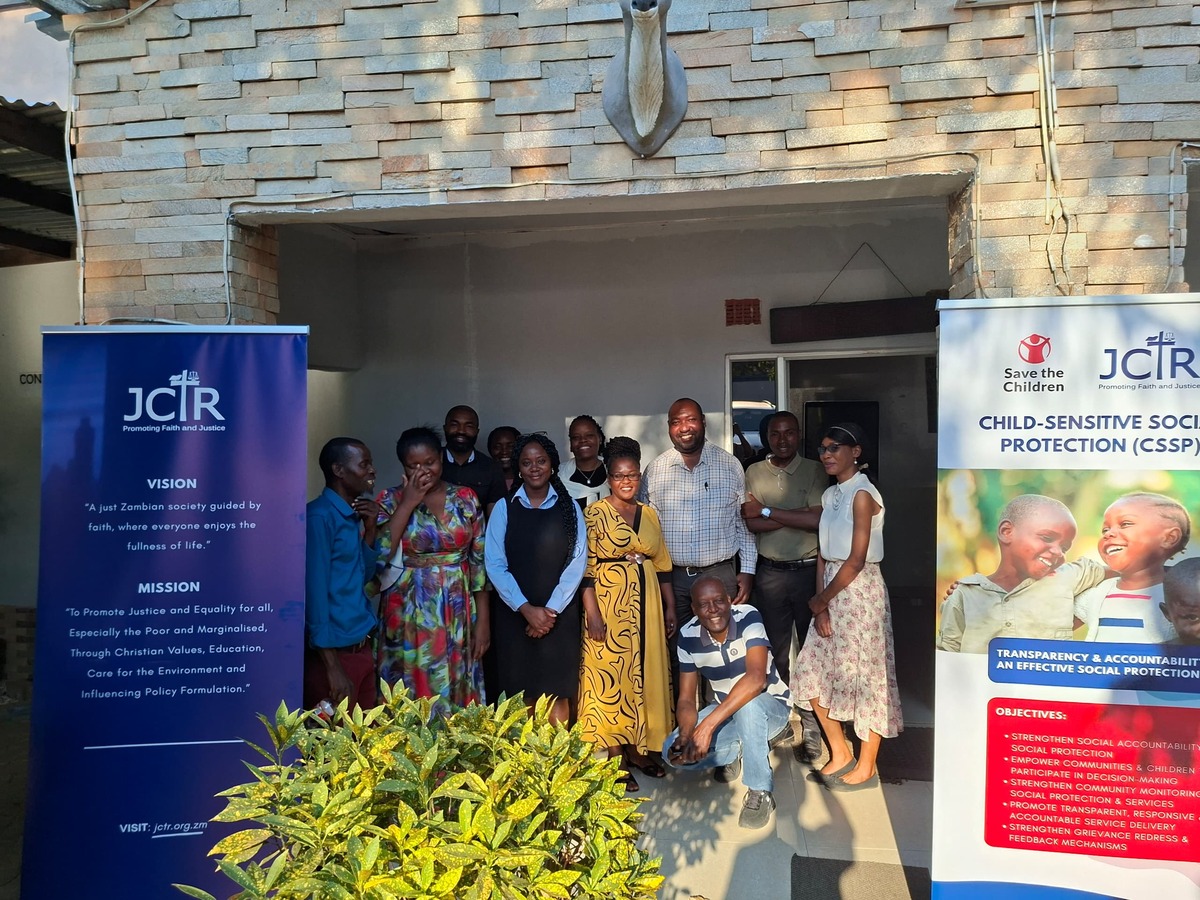
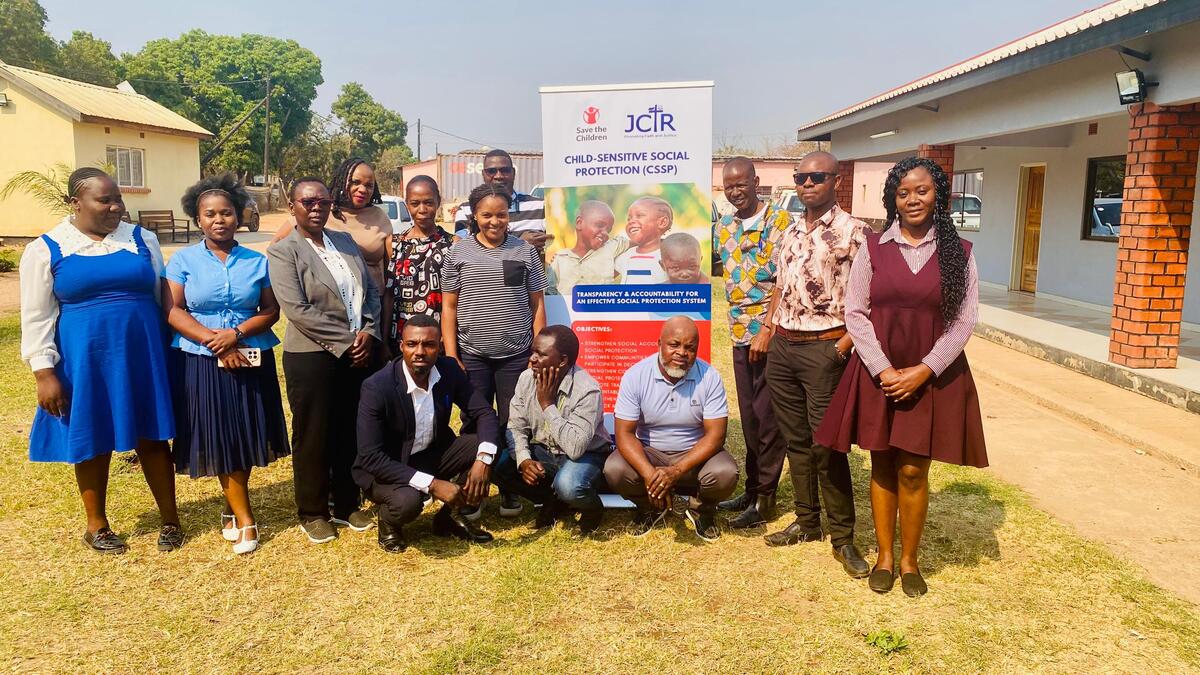
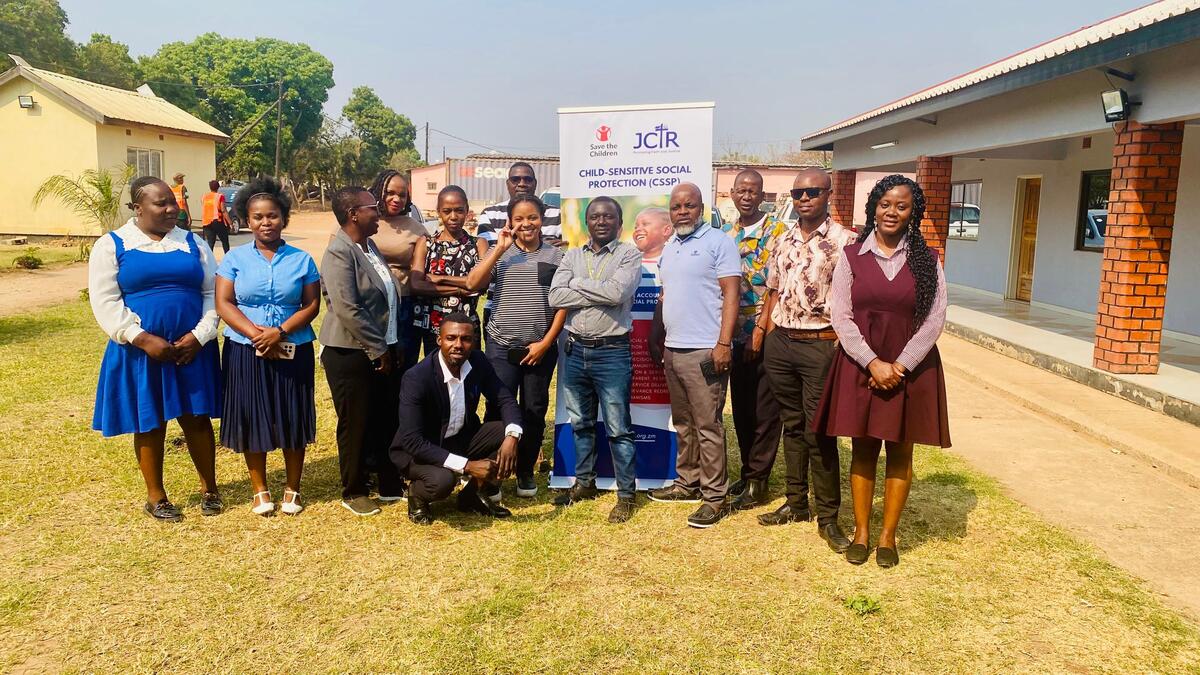
The Jesuit Centre for Theological Reflection (JCTR) conducted a two-day training on social accountability for service providers in Chongwe and Rufunsa, aimed at strengthening local accountability systems and contributing to more equitable, effective and sustainable public service delivery.
The training was conducted under the Child Sensitive and Social Protection Project (CSSP), with support from Save the Children International.
The training brought together service providers to reflect on their roles in responding to community needs and strengthening relationships between communities and those responsible for delivering essential public services. It emphasised the importance of trust, transparency, responsiveness and collaboration in addressing challenges affecting service delivery.
Through the training, participants explored practical approaches to strengthening engagement with communities and ensuring that community concerns are heard and addressed. Particular attention was given to improving responsiveness to community priorities, enhancing transparency in the utilisation of public resources, and promoting the collaborative identification and resolution of service delivery challenges.
Promoting a Human Rights-Based Approach
A key component of the training was the promotion of a Human Rights-Based Approach (HRBA) to public service delivery.
The approach recognises service providers as duty bearers with responsibilities to uphold and progressively realise people's rights, while citizens are recognised as rights holders who are entitled to access essential public services without discrimination.
Participants reflected on how service delivery can be strengthened by applying principles of equality, non-discrimination, participation, transparency and accountability. This perspective encourages service providers to move beyond viewing communities simply as beneficiaries of services and instead recognise them as active participants with legitimate rights and a role in shaping the services they receive.
By strengthening service providers' understanding of these responsibilities, the training sought to foster more constructive relationships between communities and public institutions, creating space for dialogue, feedback and joint problem-solving.
Strengthening Local Accountability
Effective social accountability depends on meaningful engagement between communities and service providers. When communities are able to raise concerns, access information and participate in decisions affecting their lives, while service providers are equipped and willing to respond, accountability becomes a shared responsibility.
The training therefore sought to contribute to stronger local mechanisms through which communities and service providers can work together to identify gaps, address challenges and improve the quality and accessibility of public services.
Ultimately, strengthening social accountability is not only about monitoring the delivery of services. It is about building trust, responsiveness and shared responsibility between citizens and institutions.
Through initiatives such as this, JCTR continues to promote approaches that place dignity, participation and accountability at the centre of development and public service delivery.


"A just Zambian society guided by faith, where everyone enjoys the fullness of life".