
Thursday, October 8, 2026 - Lusaka, Zambia
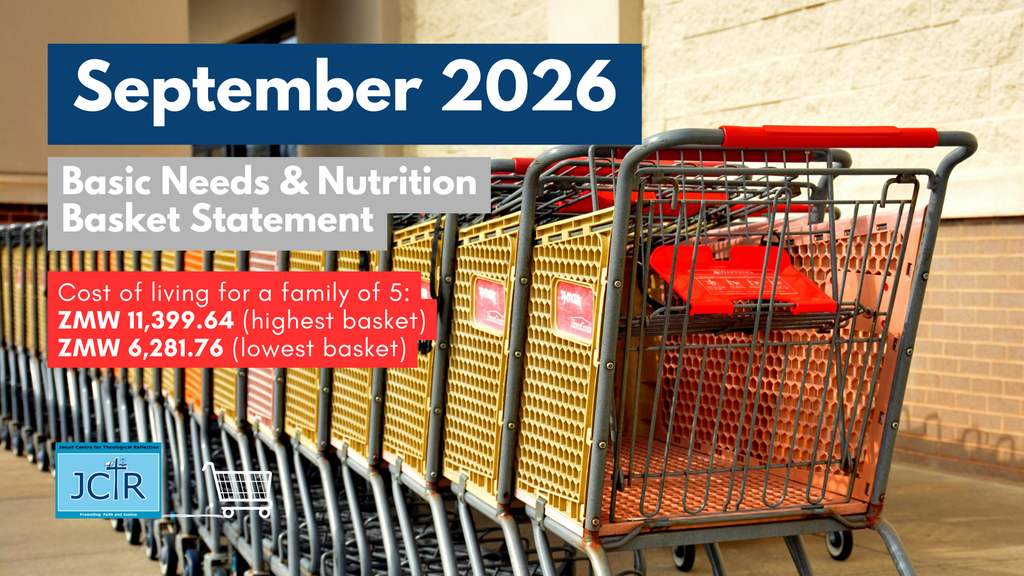
The Jesuit Centre for Theological Reflection (JCTR) Basic Needs and Nutrition Basket (BNNB) for a family of five in Lusaka stood at ZMW 11, 399.64 in September from ZMW 12, 000.94 in August, a decrease of ZMW 601.3. This decline offers relief in the cost of meeting basic household needs. The reduction was driven by lower food costs, while essential non-food items slightly increased. The monthly cost of vegetables declined from ZMW 979.70 to ZMW 763.97 for a 40kg bag, while bananas decreased from Banana ZMW 27.19 to ZMW 18.95. Other reductions included Kapenta, from ZMW 452.34 to ZMW 392.56 for 1kg, Irish potatoes, from ZMW 135.44 to ZMW 87.53 and roller mealie meal reduced from ZMW 318.57 to ZMW 287.99.
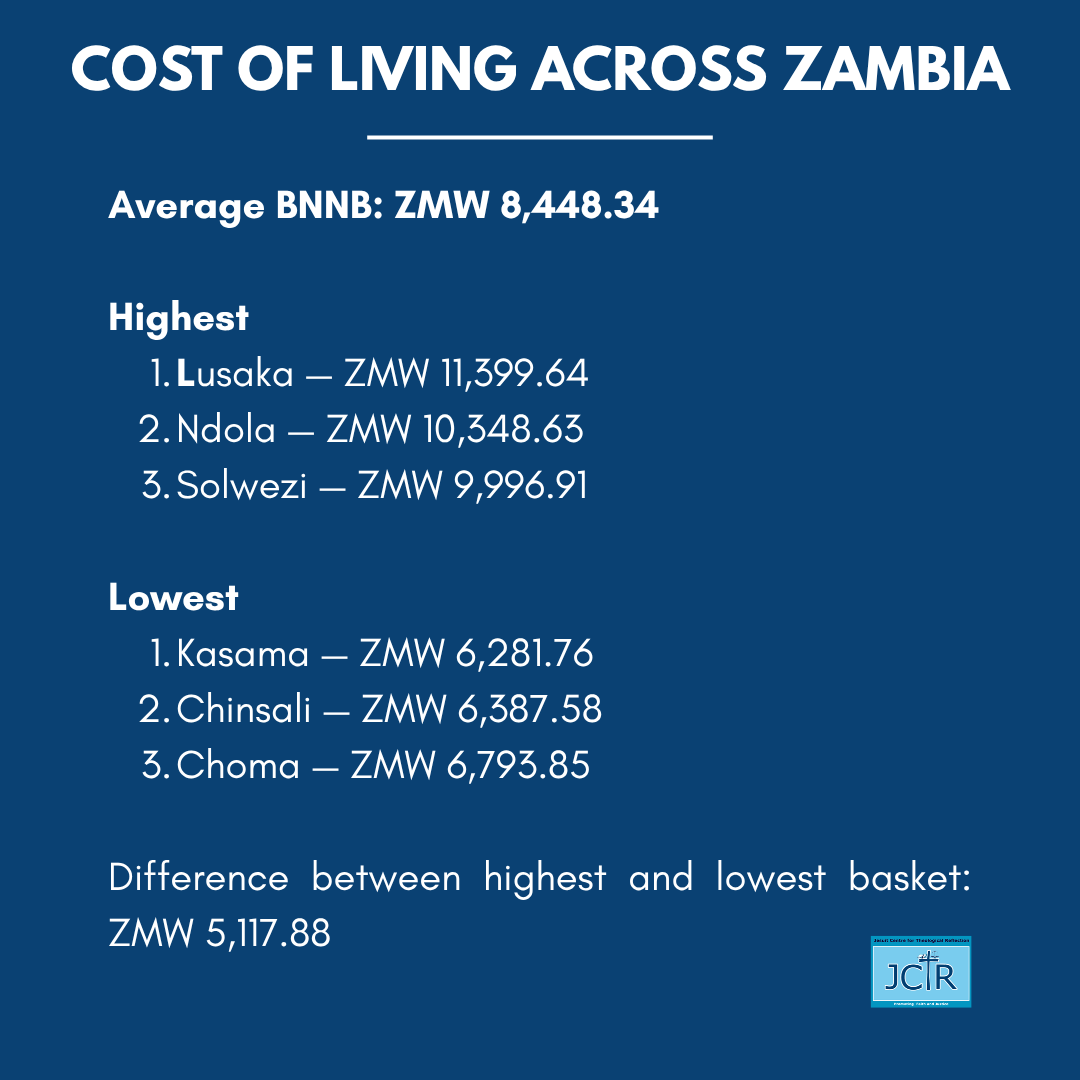
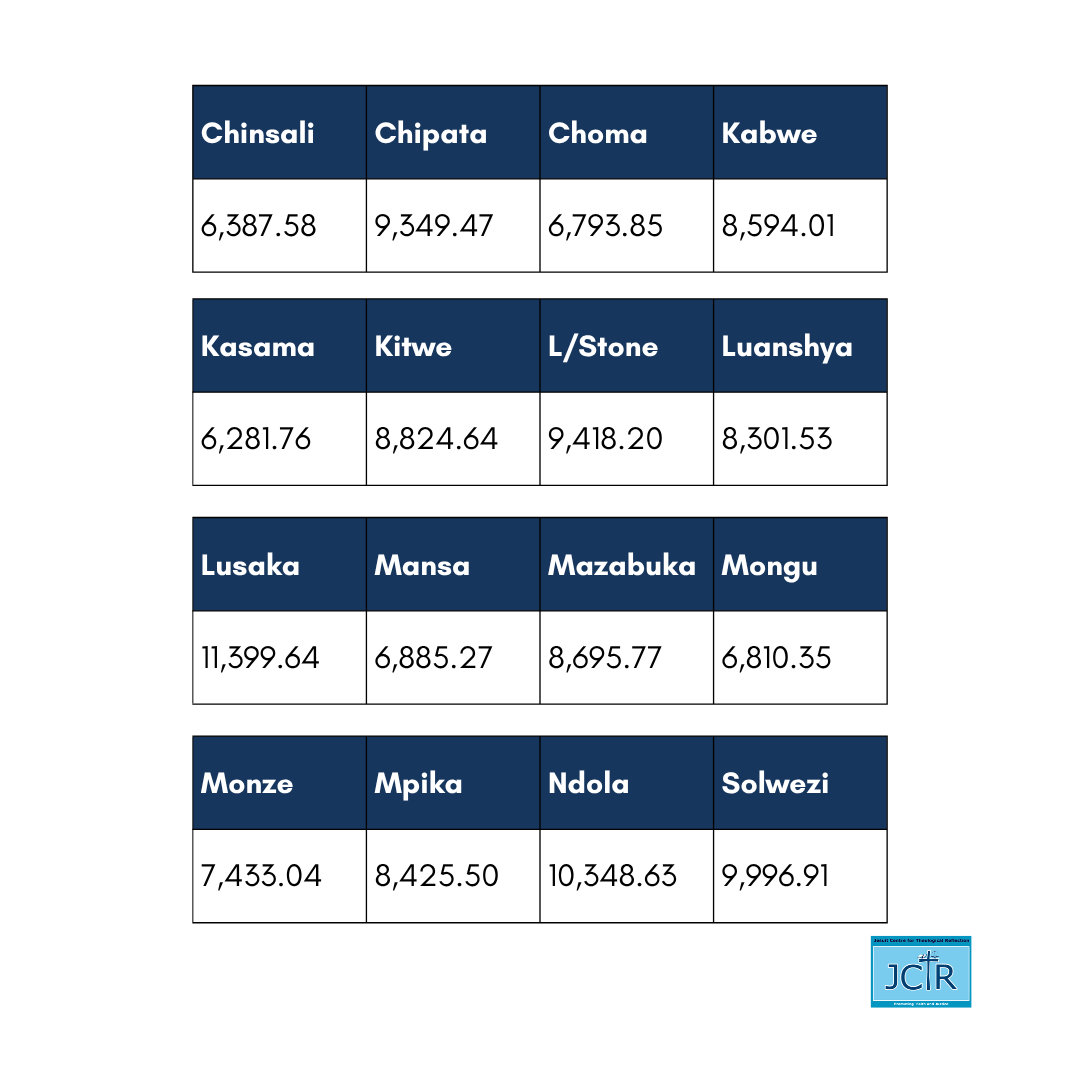
Across the 16 districts, the September BNNB showed notable differences in the cost of basic needs, with an average of ZMW 8, 448.34. Nine districts recorded costs above average, while seven were below it. Lusaka recorded the highest basket at ZMW 11, 399.64, followed by Ndola at ZMW 10, 348.63 and Solwezi at ZMW 9, 996.91. In contrast, Kasama had the lowest basket at ZMW 6, 281.76, followed by Chinsali at ZMW 6, 387.58 and Choma at ZMW 6, 793.85.
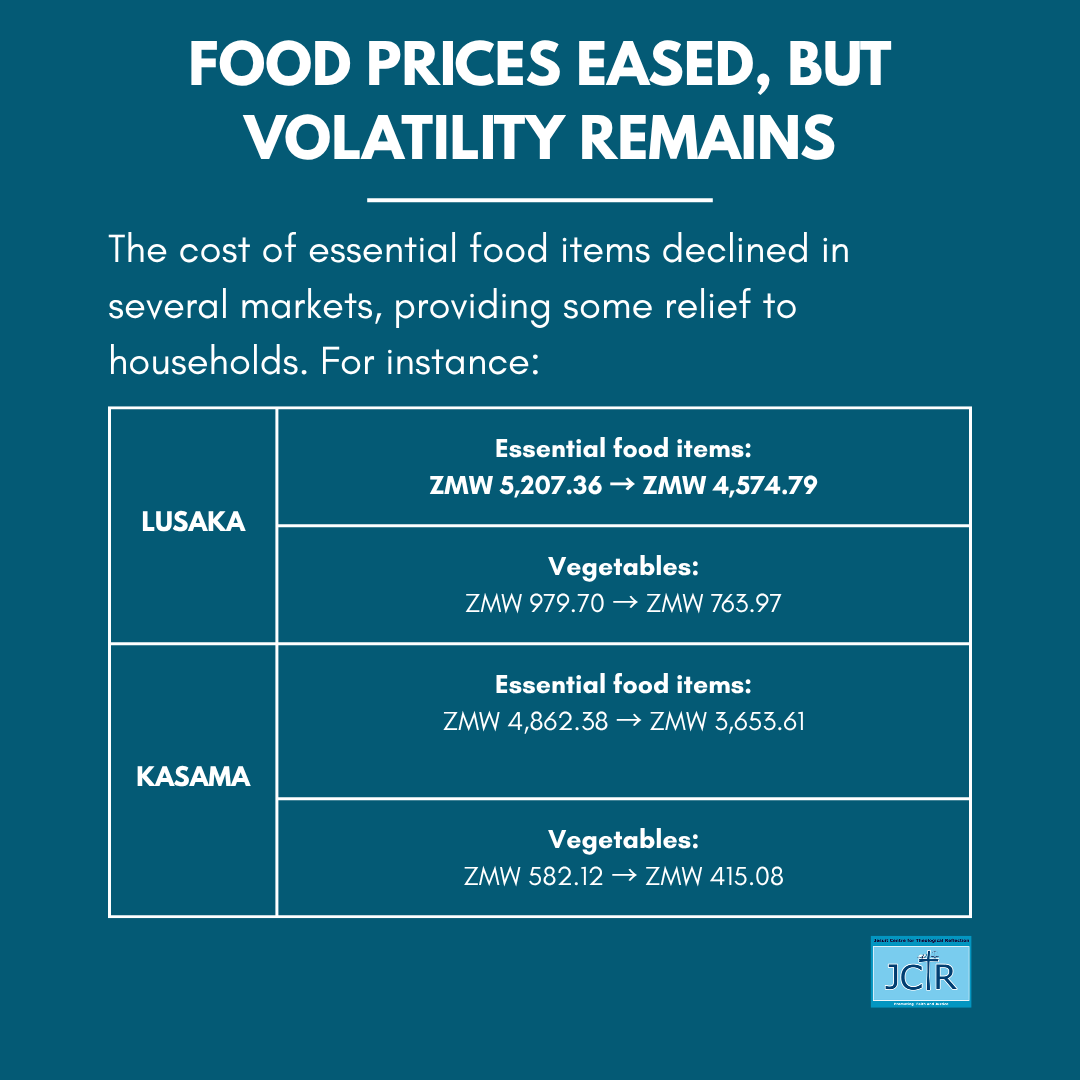
Overall, the cost of essential food items declined in September, largely due to lower prices for roller meal, rice and vegetables. In Kasama, the cost of essential food items fell from ZMW 4, 862.38 in August to ZMW 3, 653.61 in September, while vegetable prices declined from ZMW 582.12 to ZMW 415.08. A similar trend was recorded in Lusaka, where the cost of essential food items dropped from ZMW 5, 207.36 to ZMW 4, 574.79. This was mainly driven by a reduction in the price of a 40kg bag of vegetables, which fell from ZMW 979.70 to ZMW 763.97. In general, similar trends in the price of vegetables were observed across most markets in September compared to August. Mongu, Solwezi and Mazabuka recorded notable decreases across most of the vegetable prices monitored.
Lusaka and Kabwe recorded overall reductions despite slight increases in cabbage prices. Mansa and Kasama experienced mixed movements, with some vegetables increasing slightly while others declined or remained stable. Chipata recorded notable upward movement in vegetable prices, with increases observed for rape, bondwe and pumpkin leaves, while the price of cabbage remained relatively stable. The prices of vegetables continued to exhibit volatility due to changing market conditions and seasonal availability, underscoring the importance of strengthening production and distribution systems to promote price stability and food affordability. Rice prices also eased in several districts, providing some relief to households. In Lusaka, the price of a 5kg bag of rice fell from ZMW 155.64 to ZMW 144.00, while in Mansa it declined from ZMW 228.88 to ZMW 206.11 and in Kitwe from ZMW 189.00 to ZMW 180.00.
Charcoal prices remained relatively stable in September, with minor changes recorded in some districts. In Lusaka, the price of a 90kg bag increased slightly from ZMW 741.67 in August to ZMW 750.00 in September, while Ndola recorded a small decline from ZMW 770.00 to ZMW 750.00. Prices in Solwezi and Monze remained unchanged at ZMW 334.08 and ZMW 198.00, respectively. Despite these limited monthly changes, notable differences in charcoal prices persisted between districts, with a ZMW 560.00 gap between the highest and lowest prices. Lusaka and Ndola recorded the highest price, while Mpika had the lowest at ZMW 180.00. These differences may be attributed to variations in supply, transportation costs, and local demand.
Agriculture and energy remain critical priority sectors within the 2027–2029 Medium Term Budget Plan, given their central role in supporting household food security, livelihoods, employment creation and overall economic growth. While the BNNB has recorded easing food prices in recent months, it continues to reveal volatility in the prices of essential food items, particularly vegetables and other nutritious foods.
Recommendations
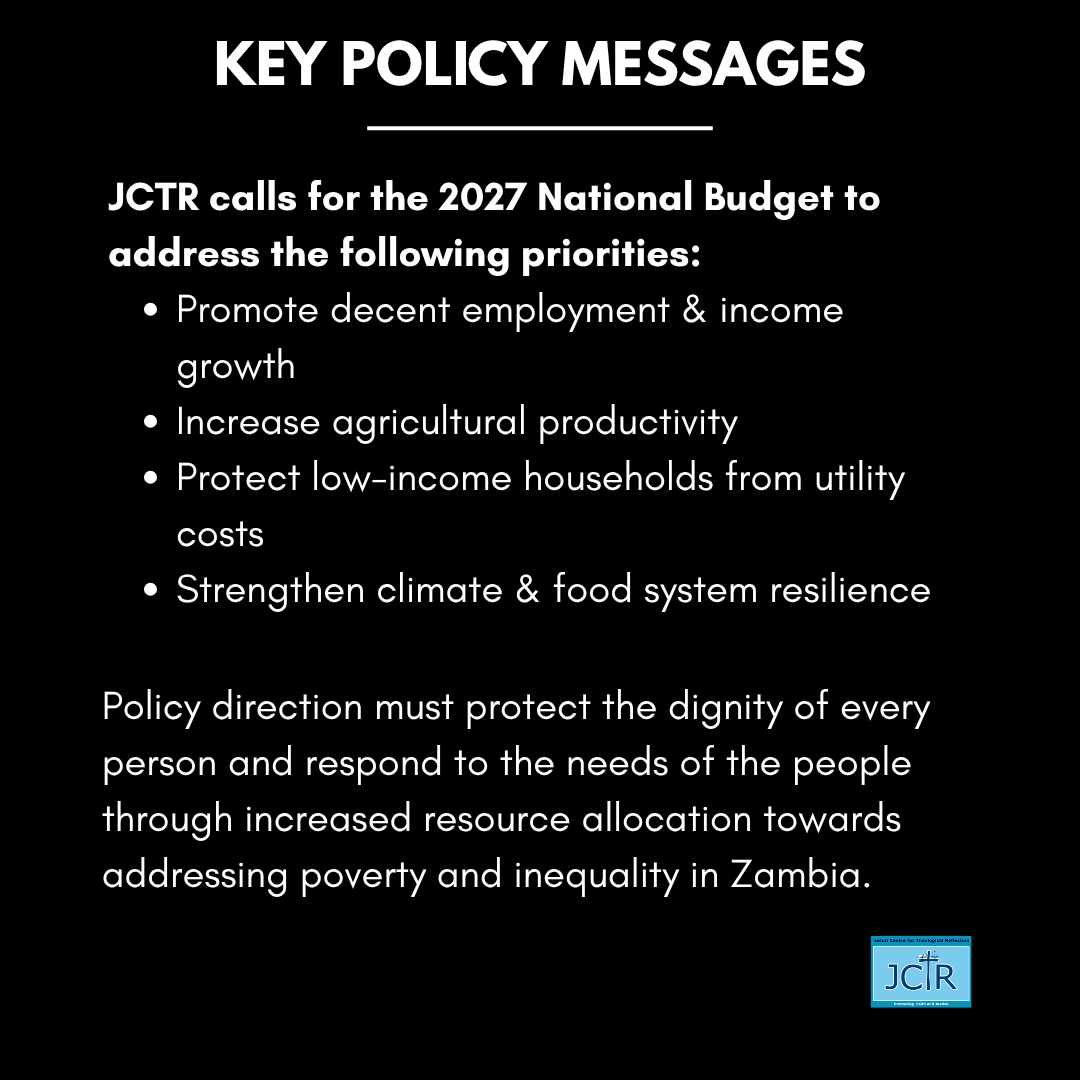
JCTR therefore recommends that the 2027 National Budget adopt the following measures to strengthen response to the cost-of-living challenge:
The Jesuit Centre for Theological Reflection urges stakeholders to ensure that policy direction for the coming period protects the dignity of every person and responds to the needs of the people through increase resource allocation towards addressing poverty and inequality in Zambia.
A COMPARISON OF COSTS (IN KWACHA) OF BASIC NEEDS & NUTRITION BASKET ACROSS ZAMBIA
| Chinsali | Chipata | Choma | Kabwe | Kasama | Kitwe | Livingstone | Luanshya | Lusaka | Mansa | Mazabuka | Mongu | Monze | Mpika | Ndola | Solwezi |
| 6,387.58 | 9,349.47 | 6,793.85 | 8,594.01 | 6,281.76 | 8,824.64 | 9,418.20 | 8,301.53 | 11,399.64 | 6,885.27 | 8,695.77 | 6,810.35 | 7,433.04 | 8,425.50 | 10,348.63 | 9,996.91 |
Issued by: Ms. Lukwesa Musonda - Programme Manager, Social & Economic Development
For further clarifications, contact the Social and Economic Development (SED) Programme at the Jesuit Centre for Theological Reflection (JCTR) on 0955290410, or email info@jctr.org.zm and admin@jctr.org.zm. Address: Martin Mwamba Road, Plot 3813, Olympia Park, Lusaka. Postal: P.O. Box 37774, Lusaka – Zambia.

"A just Zambian society guided by faith, where everyone enjoys the fullness of life".